


Improving Wire Durability in EV Chargers
2026-01-08 10:50Electric vehicles have become a major mode of transportation, but they also bring new challenges. Problems with electric vehicle charging cables are among them. Friction during use (on flat surfaces) or damage caused by rough handling can lead to cable damage. These additional expenses could be avoided. Using a cable sleeves with excellent wear resistance, flame resistance, and ease of removal would be a great convenience.
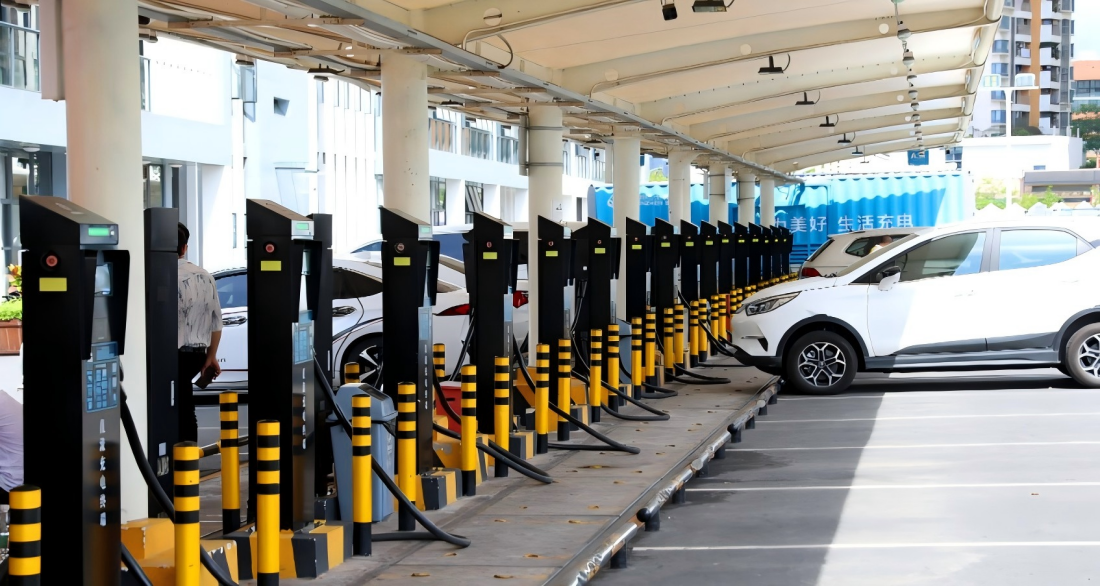
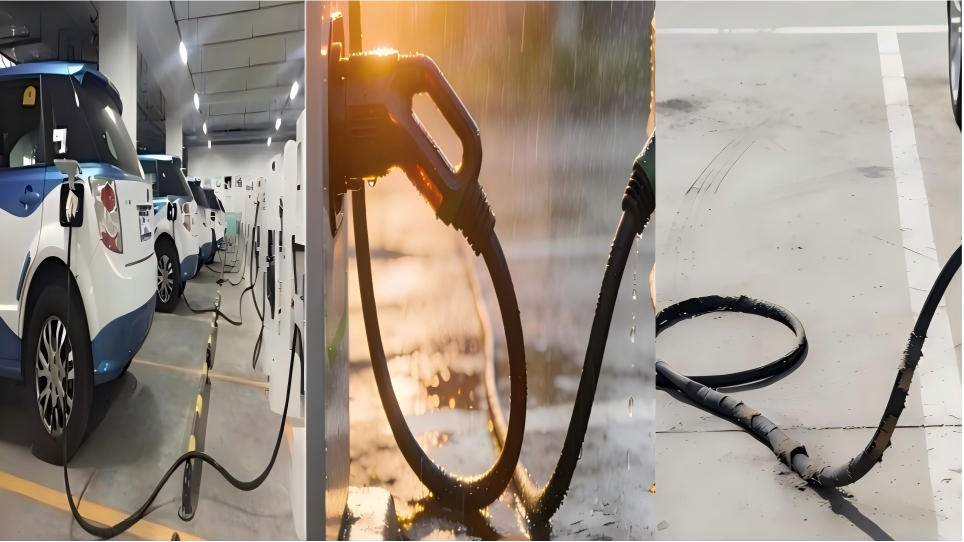
Concerns regarding electric vehicle charging cables:
Damage caused during use:
1. In a given area, the simultaneous use of a dozen or more charging stations will generate high current and high heat.
2. At public charging stations, charging cables are frequently bent and moved, which is unavoidable. However, intentional damage and rough handling do occur, and these are preventable.
3. In natural environments, sunlight, rain, dust, ultraviolet radiation, and harsh weather can all damage the cables themselves. Using cable sleeves can significantly reduce the multiple hazards these factors pose to the cables.
Without proper protection, the insulation layer of the cables will age and short-circuit more quickly, or lead to other unforeseen accidents.
Why Traditional Cable Protection Is No Longer Enough?
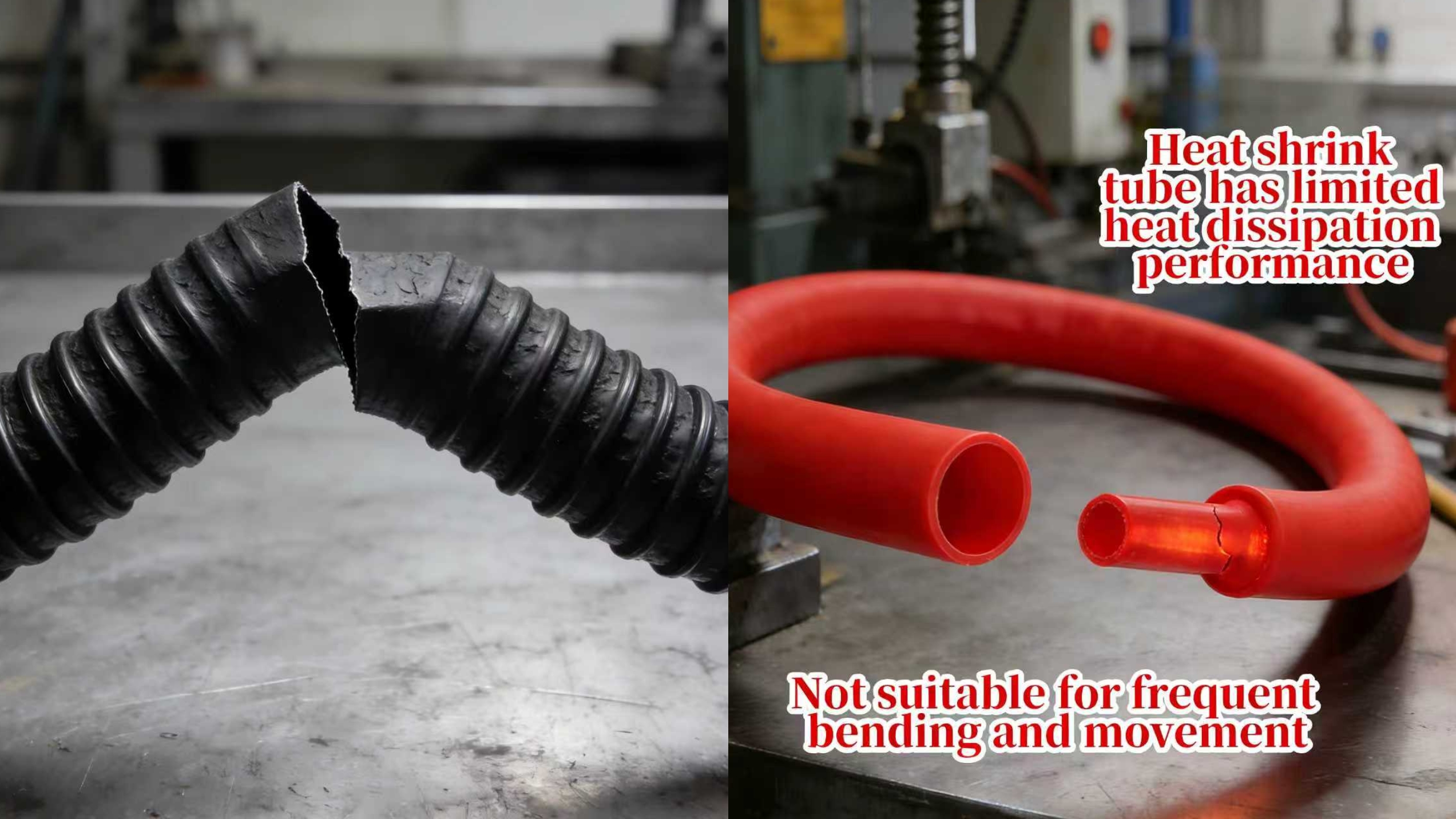
In early charging systems, charging cables typically relied on traditional methods such as heat shrink tubing and corrugated tubing for protection. However, limitations gradually became apparent after prolonged use. Heat shrink tubing, once installed, cannot be removed or adjusted, and its heat dissipation performance is limited, making it unsuitable for charging cables that require frequent bending and movement. While corrugated tubing is structurally robust, it is bulky and inflexible, resulting in high installation and maintenance costs. Traditional protection methods for charging cables struggle to balance flexibility, durability, and ease of maintenance.
The Shift in EV Charging Cable Protection Methods
Cable management sleeves are increasingly being used for electric vehicle charging cables. Compared to traditional protection methods, these new cable management sleeves are better suited to the practical use scenarios of charging cables – including self closing wire wrap and Spiral tube
self closing wire wrap
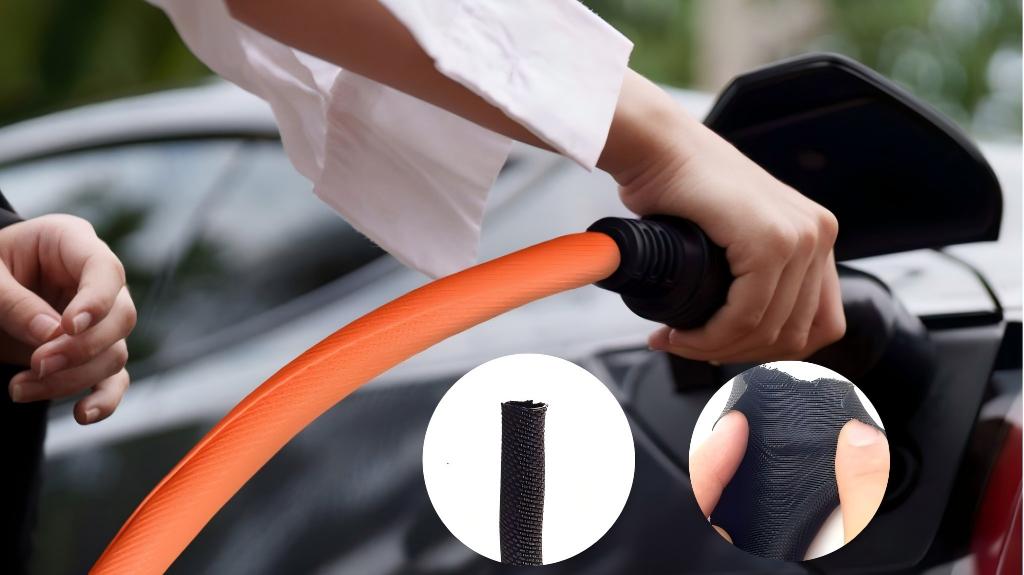
With the evolution of application scenarios, "self closing wire wrap" have emerged. self closing wire wraps feature an open structure, allowing for direct installation without disconnecting cables or connectors, significantly improving installation and maintenance efficiency. Their flexible woven structure effectively absorbs mechanical stress from bending and vibration, while providing excellent abrasion protection and maintaining good Compared to traditional solutions, the self closing wire wrap offers the following advantages:
1. Installation without disconnecting cables: It can be directly "opened → covered → self-closed" from the side of the cable, without needing to disconnect connectors or terminals.
2. Supports on-site maintenance and upgrades: It allows maintenance personnel to easily install the protective sleeve on-site without returning the product to the factory, which is very important for after-sales engineers.
3. High flexibility/reusable: It can be repeatedly opened, allowing for maintenance of the wiring and adding or removing individual wires without damaging the original wire harness structure.
4. Can cover complex connectors and branch lines: Many EV wire harnesses are not straight but have multiple branches, plugs at the ends, and connectors/clips/protective covers. The self-closing design allows it to bypass the ends of the wire harness and be installed from the side.
Spiral tube
Another open-structure solution suitable for electric vehicle charging cables:Spiral tube
Compared to corrugated tubing: More flexible and easier to maintain
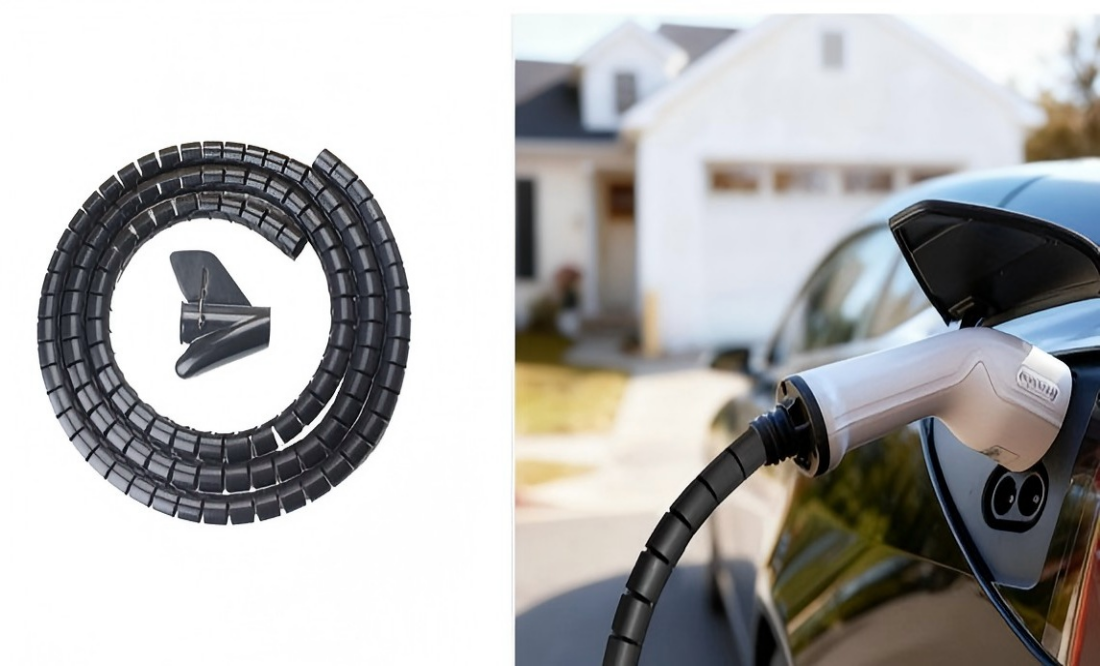
Spiral tube adopts a spiral open structure, which allows it to naturally expand and contract with the cable, maintaining excellent flexibility; spiral tube also supports partial opening, allowing for inspection or adding cables without removing the entire protective sleeve, resulting in lower maintenance costs.
Compared to heat shrink tubing: Reusable and more suitable for long-term use
Spiral tube does not require heating for installation, and can be repeatedly disassembled and reused. While keeping the cables tidy, spiral tube provides continuous wear resistance, scratch protection, and tangle prevention, better meeting the needs of long-term use and environmental protection.
This solution not only addresses the shortcomings of charging cables in terms of wear resistance, flexibility, and maintenance, but also better meets the comprehensive requirements of the current electric vehicle industry for reliability, sustainability, and long-term cost-effectiveness.
By 2025, self closing wire wrap and spiral tube will have become the preferred protection solution for electric vehicle charging cables, offering significant benefits to manufacturers and system integrators. Their ease of installation, flexibility, reusability, and compatibility with complex connectors make them superior to traditional heat shrink tubing and corrugated tubing. They improve cable durability and lifespan, enhance electrical safety and reliability, reduce maintenance and replacement costs, provide neat and organized cable management, and improve performance in outdoor and high-voltage environments.
Conclusion
QX's self closing wire wrap and spiral tube are the most effective solution for protecting charging station cables.Choosing the right cable sleeves can help charging station manufacturers improve product safety and extend service life, while also providing end-users with more reliable charging equipment.